
TNPSC Books
-
 TNPSC பொதுத் தமிழ் Book - for Group 2, 2A, 3, 4 & VAO
Original price was: ₹1,000.00.₹850.00Current price is: ₹850.00.
TNPSC பொதுத் தமிழ் Book - for Group 2, 2A, 3, 4 & VAO
Original price was: ₹1,000.00.₹850.00Current price is: ₹850.00.
-
 TNPSC General English Book - for Group 2 & 2A
Original price was: ₹1,000.00.₹850.00Current price is: ₹850.00.
TNPSC General English Book - for Group 2 & 2A
Original price was: ₹1,000.00.₹850.00Current price is: ₹850.00.
Group 1 Courses

Class Tests
PRIVATE 67
Group 1 | Postal and Online Test Series | 2022
Original price was: ₹3,200.00.₹2,800.00Current price is: ₹2,800.00. 88
TNPSC Group 1 - Test Series - 2019
Original price was: ₹3,500.00.₹2,800.00Current price is: ₹2,800.00. 542


Group 2 & 2A Courses
Class Tests
PRIVATE 67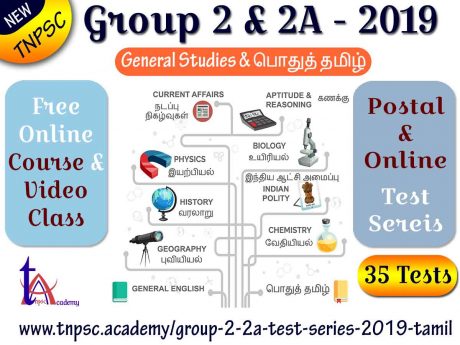
TNPSC Group 2 and 2A - Test Series - 2019 - தமிழ்
Original price was: ₹2,400.00.₹1,800.00Current price is: ₹1,800.00. 175
TNPSC Group 2 and 2A MAINS - 2022
PRIVATE 344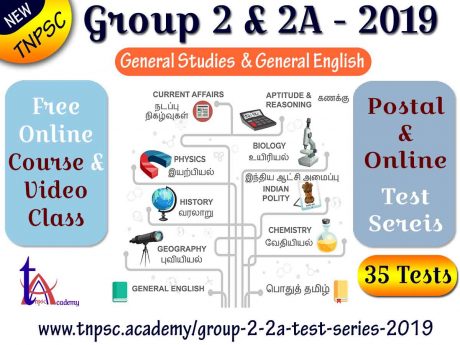
TNPSC Group 2 and 2A - Test Series - 2019
Original price was: ₹2,400.00.₹1,800.00Current price is: ₹1,800.00. 527



www.tnpsc.academy – TNPSC Current Affairs
Important News from November 17-30, 2020
Topic: Latest Diary of Events
November 17: National Epilepsy Day
Every year, the National Epilepsy Day is celebrated on November 17. The day is celebrated to create awareness about epilepsy.
What is Epilepsy?
Epilepsy is a chronic brain disorder. It results in recurrent fits or seizures. The seizures occur due to sudden and excessive discharges occurring in brain cells or neurons. The disease can be diagnosed only after the person has had at least one seizure. Mostly epilepsy occurs in patients who are over the age of 65 and in children.
According to the World Health Organization, around 50 million people in the world are suffering from epilepsy. Out of them 80% are from developing countries. The disease is curable. However, most of the epileptic patients in developing countries do not receive proper treatment. In India, more than 10 million are suffering from epilepsy. It affects both females and males of all races.
_
Topic: Profile of States
`Statue of Peace` unveiled in Rajasthan
PM Narendra Modi unveils `Statue of Peace` in Rajasthan. To mark the 151st Birth Anniversary celebrations of Jainacharya Shree Vijay Vallabh Surishwer Ji Maharaj.
The 151-inch tall statue has been made from Ashtadhatu ie 8 metals, with copper being the major constituent.
About Jainacharya Shree Vijay Vallabh Surishwer Ji Maharaj:
The saint, who lived during 1870-1954, led an austere life, working selflessly and dedicatedly to spread the message of Lord Mahavira.
He also worked relentlessly for the welfare of the masses, spread of education and eradication of social evils, wrote inspiring literature (poetry, essays, devotional hymns and stavans) and gave active support to the freedom movement and the cause of the swadeshi.
_
Topic: Books and Authors
Barack Obama publishes book “A Promised Land”
The former President of the United States Barack Obama published a memoir called “A Promised Land”. It is the first of the two volumes that Obama had written during his tenure as President of United States which is between 2009 and 2017.
Key facts:
The book concludes with the killing of Osama bin Laden in 2011. The book is to be translated in several foreign languages such as Chinese, Polish, Vietnamese, French, German, Hungarian, Hebrew, etc. The former president has mentioned Ramayana and Mahabharata in his book. Also, he has included his fascinations about Mahatma Gandhiji. He has spoken about the Gandhis and BJP as “Divisive Nationalism”.
Joe Biden, the presidential candidate who recently won the US elections, 2020 was the vice president of the USA during Barack Obama’s tenure as President.
About Barack Obama:
Obama was the first African-American President of United States. He cut the unemployment rate of USA from 10% to 4.7% during the Great Recession that occurred between 2007 and 2009. In 2010, he ended Iraq war and called off “Operation Iraqi Freedom”. He ordered, captured and killed Osama Bin Laden.
Obama passed the historic Affordable Care Act. It was also called the Obamacare. He reduced nuclear weapons through US-Russia New START treaty. US signed the JCPOA deal during the Obama’s term as president.
_
Topic: General Administration, Profile of States
Cow Cabinet: A new cabinet in Madhya Pradesh to conserve cows
The Madhya Pradesh Chief Minister Shivraj Singh Chouhan announced that the State Government is to constitute ‘Cow Cabinet’ to conserve and promote cow cattle in the state. The first meeting of the cabinet is to be held on November 22, 2020. The meeting is to be held at Gau Sanctuary Salaria Agar Malwa.
Anti-Cow Slaughter Act, 2004:
According to the act, no one in the state is allowed to transport cattle in the state. Special permission was required even to transport cattle through the state. In 2019, the State Government (Congress) of Madhya Pradesh amended the act. According to the amendment, jail term of six months and a fine of Rs 25,000 to Rs 50,000was imposed for those who were convicted of committing violence in the name of cow.
Cattle Slaughter Laws in India:
In 2005, the Supreme Court of India upheld the constitutional validity of anti-cow slaughter laws enacted in different states of India. Around 20 states in India currently have laws to regulate cow slaughter (it includes cattle slaughter as well).
Which states in India have no restrictions on cow slaughter?
The states such as Assam, Kerala, Goa, Arunachal Pradesh, Manipur, Meghalaya, Mizoram, Tripura, Nagaland and West Bengal have no restrictions on cow slaughter.
However, some states allow slaughtering of bulls and bullocks. They are Tamil Nadu, Andhra Pradesh, Telangana, Goa, Odisha, Madhya Pradesh, Jharkhand, Bihar.
_
Topic: India and its Foreign Relations
First meeting between India and Luxembourg in 20 years
The first meeting between India and Luxembourg in 20 years was held recently. The meeting resulted in three new bilateral agreements. All three agreements are in the financial space to promote trade ties between India and Luxembourg. Luxembourg is the third largest foreign investor in India.
The three agreements that have been signed are:
Luxembourg Stock Exchange with State Bank of India (SBI).
Luxembourg Stock Exchange with the India International Stock Exchange (INX).
LuxInnovation and Invest India.
Coalition for Disaster Resilient Infrastructure (CDRI):
India also invited Luxembourg to join the Coalition for Disaster Resilient Infrastructure (CDRI).
About CDRI:
Launched by Modi in September 2019 at the UN Secretary-General’s Climate Action Summit in New York, US. It is a platform where knowledge is generated and exchanged on different aspects of disaster and climate resilience of infrastructure.
It will create a mechanism to assist countries to upgrade their capacities and practices, with regard to infrastructure development in accordance with their risk context and economic needs.
Benefits and significance:
This initiative will benefit all sections of society.
Economically weaker sections of society, women and children, are the most vulnerable to the impacts of disasters and hence, will be benefitted from the improvement of knowledge and practice in creating disaster resilient infrastructure.
It will also benefit all areas with high disaster risk.
In India, the north-eastern and Himalayan regions are prone to earthquakes, coastal areas to cyclones and tsunamis and central peninsular region to droughts.
Why do we need a global coalition?
Many countries, including India, have over the years developed robust disaster management practices that have helped in sharply reducing human casualties in a disaster. However, the economic costs of a disaster remain huge, mainly due to the damage caused to big infrastructure.
A global coalition for disaster resilient infrastructure would address concerns that are common to developing and developed countries, small and large economies, countries at early and advanced stages of infrastructure development, and countries that have moderate or high disaster risk.
_
Topic: Awards and Honours
Booker Prize 2020 won by Douglas Stuart
The Booker Prize of the year 2020 was won by Douglas Stuart for his debut novel “Shuggie Bain”. The shortlist of Booker Prize consisted of five more titles such as Burnt Sugar. The Burnt Sugar was published in India as “Girl in White Cotton”. It also included “The New Wilderness” by Diane Cook, “The Shadow King” by Maaza Mengiste, “This Mournable Body” by Tsitsi Dangarembga, “Real Life” by Brandon Taylor and “The Shadow King” by Maaza Mengiste.
Apart from these authors, the event also witnessed the participation of former US President Barack Obama. He recently published the first volume of his book “A Promised Land”.The book was written by Obama during his tenure as the President of United States (2009-17).
About Booker Prize:
The Booker Prize is a literary prize awarded annually for the best novel. The prize is awarded to novels written in English and published in Ireland or UK. It was formerly known as “Booker-McConnell Prize” (1969-2001) and Man Booker Prize (2002-2019). In 1997, Arundati Roy of India won the Booker Prize for her Novel “The God of Small Things”.
The Booker Prize carries 50,000 pounds of cash money. Douglas Stuart who won the 2020 Booker Prize was the only British author on the US-dominated shortlist. Douglas was born in Glasgow.
_
Topic: India and its Foreign Relations
SITMEX 2020: India, Singapore and Thailand hold Naval Exercise
The trilateral Naval exercise, SITMEX-20between India, Singapore and Thailand was held in the Andaman sea. The SITMEX-20 Naval exercise was scheduled in a “non-contact at sea only format” due to covid-19 restrictions. The main objective of the exercise is to increase the interoperability between the three navies. The exercise will also enhance multifaceted Maritime operations.
Apart from SITMEX, India and Singapore held SIMBEX-20 separately in the Andaman sea.
About the exercise:
The exercise involved weapon firing on the surface, war at sea exercise, coordinated navigation operation and seamanship evolution. The Indian Navy was represented by INS Karmuk and INS Kamorta. The Singapore Navy was represented by RSS Intrepid, RSS Endeavour. The Thailand Navy was represented by a Chao class frigate HTMS Kraburi.
The conduct of the trilateral naval exercise between India Singapore and Thailand was announced by Prime Minister Narendra Modi during the Shangri La dialogue. The maiden edition of the exercise was held in 2019.
_
Topic: Profile of States, Latest Diary of Events
Cyclone ‘Nivar’
After cyclones ‘Amphan’, ‘Nisarga’ and ‘Gati’, ‘Nivar’ is heading towards Karaikal in Puducherry and is expected to make the landfall on November 25. Nivar is the third name to be used from the new list of names for North Indian Ocean Cyclones, released in 2020. It was suggested by Iran.
‘Amphan’, which was proposed by Thailand, was the last name in the 2004 series.
‘Nisarga’, which hit Maharashtra in June, was a name given by Bangladesh while India had proposed ‘Gati’, which made landfall over Somalia on November 22.
How are Cyclones named?
The names for tropical cyclones in the Bay of Bengal and the Arabian Sea are suggested by Bangladesh, India, Maldives, Myanmar, Oman, Pakistan, Sri Lanka, Thailand, Iran, Qatar, Saudi Arabia, the UAE and Yemen as per the formula agreed by World Meteorological Organisation and the United Nations Economic and Social Commission for Asia and the Pacific in its 27th session in 2000.
Each country provides 13 names.
In the latest list, India had proposed:
Gati (speed), Tej (speed), Marasu (musical instrument in Tamil), Aag (fire) and Neer (water), among others, for the new list.
The names of the next few cyclones adopted by member countries in April 2020 are as follows:
Burevi (Maldives), Tauktae (Myanmar), Yaas (Oman), and Gulab (Pakistan).
These are among the 169 names suggested by the 13 countries.
_
Topic: Latest inventions on Science and TechnologyISRO’s Shukrayaan
The Indian Space Research Organisation (ISRO) has short-listed 20 space-based experiment proposals for its proposed Venus orbiter mission ‘Shukrayaan’.
About Shukrayaan:
It is a mission to study Venusfor more than four years.
Scientific objectives:Investigation of the surface processes and shallow subsurface stratigraphy; and solar wind interaction with Venusian Ionosphere, and studying the structure, composition and dynamics of the atmosphere.
The satellite is planned to be launched onboard GSLV Mk II rocket.
The proposed orbit is expected to be around 500 x 60,000 km around Venus. This orbit is likely to be reduced gradually, over several months to a lower apoapsis (farthest point).
Why study Venus?
Venus is often described as the “twin sister” of the Earth because of the similarities in size, mass, density, bulk composition and gravity. It is believed that both planets share a common origin, forming at the same time out of a condensing nebulosity around 4.5 billion years ago. Venus is around 30 per cent closer to the Sun as compared to Earth resulting in much higher solar flux.
_
Topic: Profile of States
Protest Against Bru Resettlement
Recently, parts of north Tripura have witnessed violent protests over the proposed resettlement of Bru tribals.
Key facts:
Bru or Reang is a community indigenous to Northeast India, living mostly in Tripura, Mizoram and Assam. In Tripura, they are recognised as a Particularly Vulnerable Tribal Group. In Mizoram, they have been targeted by groups that do not consider them indigenous to the state. In 1997, following ethnic clashes, nearly 37,000 Brus fled Mamit, Kolasib and Lunglei districts of Mizoram and were accommodated in relief camps in Tripura.
Since then, 5,000 have returned to Mizoram in eight phases of repatriation, while 32,000 still live in six relief camps in North Tripura. In January 2020, a quadrilateral agreement was signed by the Centre, the two state governments and Bru representatives to allow the remaining 32,000 to permanently settle in Tripura.
2020 Agreement:
After the agreement was made in January 2020, the state has planned 12 resettlement spots across six districts with 300 families each. The Centre has announced a special development project with funding of Rs. 600 crore.
Each resettled family will get an estimated 0.03 acres of land for building a home, Rs. 1.5 lakh as housing assistance, and Rs. 4 lakh as a one-time cash benefit for sustenance, a monthly allowance of Rs. 5,000 and free rations for two years from the date of resettlement.
Reason for the Protest:
The 2020 agreement led to protests from Bengali and Mizo groups in Tripura. They claim that settling thousands of migrants permanently in Kanchanpur sub-division of North Tripura district would lead to demographic imbalance, exert pressure on local resources and potentially lead to law and order problems.
They alleged that 650 Bengali families from around Kanchanpur and 81 Mizo families from Jampui Hill range, who fled due to “atrocities” by Brus, were yet to be resettled two decades on.
Conditions of the Brus:
They are in fear and uncertainty as they suffer an economic blockade due to these protests. They haven’t received foodgrains as per their relief package this month and if the protest continues, their condition will deteriorate further.
_
Topic: General Administration
PRAGATI Meeting
Recently, the Prime Minister (PM) has chaired the 33rd PRAGATI meeting. Interaction through PRAGATI is held once every month on Fourth Wednesday, known as PRAGATI Day.
Highlights of the Meeting:
The PM asked states to develop a state-specific export strategy, and reviewed development projects worth Rs. 1.41 lakh crore spread across 10 states and union territories. Grievances related to Covid-19 and to the PM Awas Yojana (Gramin) were also taken up. PM SVANidhi, agriculture reforms and development of districts as export hubs were reviewed.
PRAGATI:
Launched in 2015, PRAGATI is the multimodal platform for Pro-Active Governance and Timely Implementation involving central and state governments. It has been designed by the Prime Minister’s Office (PMO) team with the help of the National Informatics Center (NIC).
It enables the PM to discuss the issues with the concerned central and state officials with full information and latest visuals of the ground-level situation.
It is a three-tier system (PMO, Union Government Secretaries, and Chief Secretaries of the States).
Objective:
Grievance Redressal
Programme Implementation
Project Monitoring
The PRAGATI platform uniquely bundles three latest technologies: Digital data management, video-conferencing and geo-spatial technology.
Significance:
It promotes cooperative federalism as it brings together the Secretaries of Government of India and the Chief Secretaries of the States. It is a robust system for bringing e-transparency and e-accountability with real-time presence and exchange among the key stakeholders. It is an innovative project in e-governance and good governance.
Concerns: The direct interaction of the PM with the state secretaries without involving the political executives of the states is undermining the state political executive.
It is also said that this is leading to a concentration of power in the extra-constitutional office of PMO.
_
Topic: General Administration, Profile of StatesAwards for Tiger Conservation
The Pilibhit Tiger Reserve (PTR – Uttar Pradesh) has bagged international award TX2 for doubling the number of tigers in the past four years. Also, the Transboundary Manas Conservation Area or TraMCA (India-Bhutan border) has received the Conservation Excellence Award for 2020.
Earlier, India’s 2018 Tiger census (once in every four years) had set a Guinness record for being the largest camera-trap wildlife survey.
About the Awards:
Launched recently, these awards were open to submissions from any site in a tiger range country that has achieved remarkable measurable progress since 2010.
Site: An area having a functional tiger population, legally designated as a “site” under national legislation. Award winners were announced on 23rd November 2020 – the 10 year anniversary for the global TX2 goal. Sites will receive a small financial grant to be used to further tiger conservation.
TX2 Award: It goes to one site that has achieved remarkable and measurable increase in its tiger population since 2010.
Bagged TX2 Award:The number of tigers in the reserve area has gone up to 65 from 25 in the period of just four years (2014-18).
_
Topic: Latest Diary of Events, Profile of States
The Beautiful ‘Blue Tide’ Spotted Along Mumbai Coastline
The tide producing a fluorescent blue hue, popularly known as bioluminescence, recently made an appearance at Mumbai’s Juhu Beach and Devgad Beach in Sindhudurg, along Maharashtra’s coastline.
Background:
Bioluminescence has been an annual occurrence along the west coast since 2016, especially during the months of November and December.
Why is it caused?
The spectacle occurs when phytoplankton (microscopic marine plants), commonly known as dinoflagellates, produce light through chemical reactions in proteins. Waves disturb these unicellular microorganisms and makes them release blue light.
Main factors for its occurrence could be eutrophication – the reduction of oxygen in the water – which makes the phytoplanktons very dominant.
Why it is dangerous?
The spectacle may be beautiful, but it may also be a signal of danger. Many of the species in this group are toxic. If dinoflagellates reproduce rapidly, they may cause so-called ‘red tides’.
During this period all the animals (molluscs, fish, etc.) that feed on dinoflagellates also become toxic due to the accumulation of high amounts of toxins from dinoflagellates.
It is dangerous to eat such sea animals because the toxins that are contained in them may have various unpleasant effects: some merely irritate the bowel and cause food poisoning, whereas others, being neurotoxins, may even have an effect on memory.
Some species, such as the sea sparkle (Noctiluca scintillans) are not as toxic, but may have other unpleasant effects.
_
Topic: Latest inventions on Science and Technology
Japan’s Hayabusa2 spacecraft carrying asteroid soil samples nears Earth
Japan’s Hayabusa2 spacecraft left the asteroid Ryugu a year ago and is expected to reach Earth and drop a capsule containing the precious samples in southern Australia on December 6. The soil samples and data from the asteroid could provide clues to the origins of the solar system.
Hayabusa2 project:
It is an asteroid sample-return mission operated by the Japanese space agency, JAXA. It was launched on 3 December 2014 and rendezvoused with Ryugu on 27 June 2018.
It carried multiple science payloads for remote sensing, sampling, and four small rovers that will investigate the asteroid surface to inform the environmental and geological context of the samples collected.
The scientific objectives of Hayabusa2 mission are twofold:
To characterize the asteroid from remote sensing observations (with multispectral cameras, near-infrared spectrometer, thermal infrared imager, laser altimeter) on a macroscopic scale
To analyse the samples returned from the asteroid on a microscopic scale.
What is the significance of the mission?
Ryugu is a C-type asteroid – a relic from the early days of the Solar System. Scientists think that C-type asteroids contain both organic matter, and trapped water, and might have been responsible for bringing both to Earth, thereby providing the planet with the materials necessary for life to originate.