
TNPSC Books
-
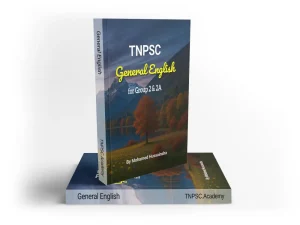 TNPSC General English Book - for Group 2 & 2A
Original price was: ₹1,000.00.₹850.00Current price is: ₹850.00.
TNPSC General English Book - for Group 2 & 2A
Original price was: ₹1,000.00.₹850.00Current price is: ₹850.00.
-
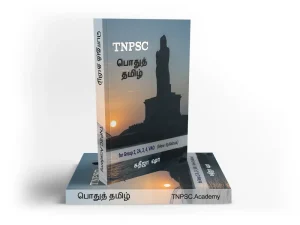 TNPSC பொதுத் தமிழ் Book - for Group 2, 2A, 3, 4 & VAO
Original price was: ₹1,000.00.₹850.00Current price is: ₹850.00.
TNPSC பொதுத் தமிழ் Book - for Group 2, 2A, 3, 4 & VAO
Original price was: ₹1,000.00.₹850.00Current price is: ₹850.00.
Group 1 Courses

Class Tests
PRIVATE 67
TNPSC Group 1 - Test Series - 2019
Original price was: ₹3,500.00.₹2,800.00Current price is: ₹2,800.00. 542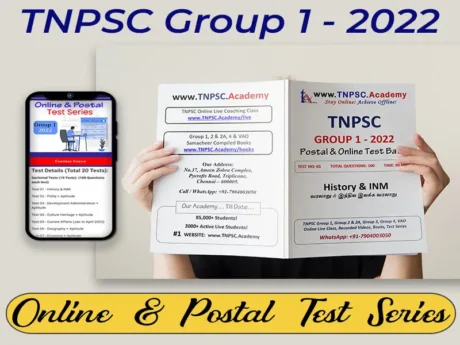
Group 1 | Postal and Online Test Series | 2022
Original price was: ₹3,200.00.₹2,800.00Current price is: ₹2,800.00. 88

Group 2 & 2A Courses
Class Tests
PRIVATE 67
TNPSC Group 2 and 2A MAINS - 2022
PRIVATE 344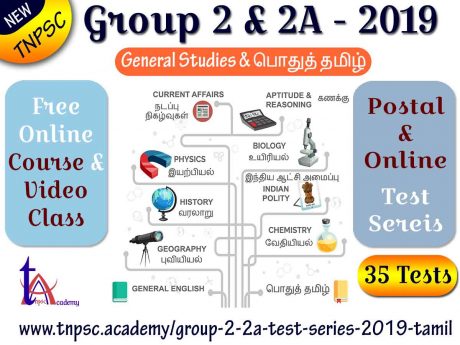
TNPSC Group 2 and 2A - Test Series - 2019 - தமிழ்
Original price was: ₹2,400.00.₹1,800.00Current price is: ₹1,800.00. 175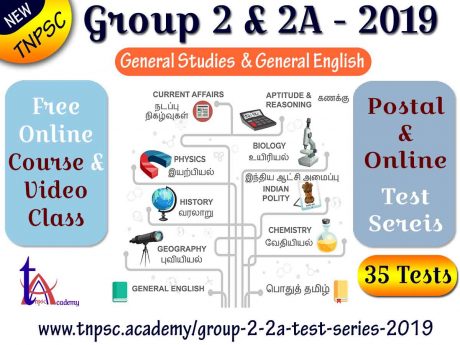
TNPSC Group 2 and 2A - Test Series - 2019
Original price was: ₹2,400.00.₹1,800.00Current price is: ₹1,800.00. 527



www.tnpsc.academy – TNPSC Current Affairs February (22-27), 2021
Topic: Latest inventions on Science and Technology
What is Carbon Watch— India’s 1st app to assess one’s carbon footprint?
Chandigarh became the first state or Union Territory in India to launch Carbon Watch.
What is Carbon Watch? It is a mobile application to assess the carbon footprint of an individual.
What is Carbon Footprint? Carbon footprint is the amount of greenhouse gases-especially carbon dioxide-released into the atmosphere by a particular human activity.
How does the app Carbon Watch work?
As a person downloads the application, they will need to fill details in four parts- Water, Energy, Waste Generation and Transport (Vehicular movement). In each category, they will be required to inform about their respective consumptions and waste generations.
With the mentioned information, the mobile application will automatically calculate the carbon footprint of the individual.
The application will also provide information such as the national and world average of the emission, and the individual’s level of emission generation.
Solutions:
The mobile application will suggest methods to reduce the carbon footprints. The application will suggest ways as per the information furnished by the individuals.
Motive behind designing this application?
Making the people Climate-Smart Citizens while making them capable of accessing their carbon footprint, along with providing them with steps to reduce it, is the motive behind the application.
Topic: Latest inventions on Science and Technology, Discovery of Rare Species
Black-footed ferret
Scientists have successfully cloned an endangered black-footed ferret using frozen cells from along-dead wild animal, the first time any native endangered species has been cloned in the United States.
She is named as Elizabeth Ann. The species is North America’s only native ferret. The species was considered extinct until seven were found in 1981.
Topic: Profile of States
Mass Migration of Blue Earthworms in Meghalaya
The Zoological Survey of India (ZSI) has prepared a report on two-way mass migration of the blue earthworms in the state of Meghalaya.
Key facts:
The blue earthworms, measuring up to 1.6 feet in length, migrate up and down to 300 metres in the East Khasi Hills of the state. Uphill migration of the earthworms starts in April-May. With the onset of monsoon, they emerge from the rivers and streams.
Downhill migration occurs during September-October when the vegetation starts to dry and temperature & humidity drop. The locals in the state beat them when they observe these earthworms because of they play a major role in enhancing the fertility of soil. Further, it helps in shifting the locals to ecologically sustainable organic farming.
Topic: Profile of States, General Administration
UP Budget 2021: UP becomes first state to table paperless budget
The state of Uttar Pradesh has become the first Indian State that has tabled the paperless budget. The State finance minister, Suresh Khanna presented the State Budget for 2021-2022 on February 22, 2021 in the paperless mode.
Key facts:
The members of the State Legislature were provided with the iPads so as to keep a tab on the budget highlights. Budget highlights were also displayed on two big screens in the house.
Budget document was also made available on the budget App of the Uttar Pradesh named as “Uttar Pradesh Sarkar Ka Budget”. This app can be downloaded from the Google Play Store.
Topic: International Relations
India – Maldives
Recently, India and the Maldives have signed a defence Line of Credit agreement worth USD 50 million. The agreement was signed during the visit by the External Affairs Minister of India to Maldives.
Key facts:
Defence Line of Credit:
It was signed pursuant to the request by the Government of Maldives in April 2013 for India’s support and cooperation in enhancing the capability of the Maldives Defence Forces in maritime surveillance, and subsequent requests in October 2015 and March 2016.
It is seen as key to India’s and Maldives’ strategic interests, particularly given China’s increasing footprint in the Indian Ocean Region.
Topic: International Relations
Bangladesh bans all known Vulture-Toxic Drugs
Bangladesh has become the first country that has banned the painkiller ketoprofen. This painkiller is used widely to treat the cattle. But this painkiller is toxic to vultures.
Key facts:
Earlier, veterinary diclofenac was also banned some 10 years ago. This is a landmark move to save the remaining population of globally threatened vultures. Experts says, similar steps need to be taken by India, Pakistan, Nepal and Cambodia in order to save the population of vultures.
What this ban was put?
The Saving Asia’s Vultures from Extinction (SAVE) report states that ketoprofen is now widely used as a main anti-inflammatory drug by vets in Bangladesh. But, Non-Steroidal Anti-Inflammatory Drugs (NSAIDs) such as diclofenac and ketoprofen are a major threat to vultures of South Asia. These drugs led to the catastrophic 99.9 per cent declines of white-rumped vultures in this region.
Topic: Awards and Honours
200 wickets of left-handers
Ravichandran Ashwin has become the first player in the 143-year history of Test cricket to take 200 wickets against left-handed batsmen. He achieved this feat during India’s second Test against England at the MA Chidambaram Stadium, Chennai.
Ashwin has picked 391 wickets till now in his career. The second most successful bowler in Test cricket against left-handed batsmen is Sri Lankan Muttiah Muralitharan (191).
Topic: Awards and Honours
Indian activist gets U.S’ International Anti-corruption Champions Award
An Indian social activist, Anjali Bhardwaj, who works on issues of transparency and accountability has been selected for the “United State International Anti-Corruption Champions Award” along with the other 11 anti-corruption champions. These names were announced by Joe Biden administration.
Key facts:
Biden administration is of the view that, these issues can be tackled only by working in coordination with the committed partners.
These partners could be:
Courageous individuals, who champion the anti-corruption efforts and
Countries, which are working to fulfil their commitments with respect to the international anti-corruption standards.
Thus, this new International Anti-Corruption Champions Award was announced that recognised individuals who have worked tirelessly against transparency & corruption in order to ensure the accountability in their own countries.
About Anjali Bhardwaj:
She is a 48-year-old activist who is also the founder of ‘Satark Nagrik Sangathan (SNS)’. SNS is a citizens’ group that promote transparency and accountability in government and also encourage the active participation of citizens.
She has also served as an active member in the “Right to Information Movement” in India. She is a convener of National Campaign for People’s’ Right to Information. This campaign resulted into establishment of an anti-corruption ombudsman and Whistleblowers’ Protection Act.
Topic: Profile of States
President inaugurates world’s largest stadium in Gujarat
The President of India, Ram Nath Kovind, has inaugurated the world’s largest Stadium at Motera, in Gujarat on February 24, 2021. The Motera stadium was later renamed as the Narendra Modi Stadium.
This stadium has surpassed the Melbourne Cricket Ground and became the largest stadium in the world. This stadium is going to make history by hosting the second home pink-ball test match on February 24 between India and England.
Topic: New Appointments
National Commission for Scheduled Castes
Recently, Vijay Sampla has been appointed as the chairman of the National Commission for Scheduled Castes (NCSC). NCSC is a constitutional body that works to safeguard the interests of the scheduled castes (SC) in India.
Article 338 of the constitution of India deals with this commission:
It provides for a National Commission for the Scheduled Castes and Scheduled Tribes with duties to investigate and monitor all matters relating to safeguards provided for them, to inquire into specific complaints and to participate and advise on the planning process of their socio-economic development etc.
Topic: Profile of States, General Administration
Puducherry: Cabinet gives nod for President’s Rule
As expected, Puducherry has been placed under President’s rule. Chief Minister V. Narayanasamy submitted his resignation to Lieutenant-Governor Tamilisai Soundararajan as it became apparent that he had lost the confidence of the House.
Possible Scenarios after CM lost the confidence of the House:
In a probability, the opposition combine may stake claim to form government.
The LG may recommend President’s Rule in the state as elections are just around the corner.
The LG may ask Narayanasamy to continue as caretaker CM till elections are held.
What is President’s Rule in the Indian context?
Article 356 of the Constitution of India gives President of India the power to suspend state government and impose President’s rule of any state in the country if “he is satisfied that a situation has arisen in which the government of the state cannot be carried on in accordance with the provisions of the Constitution”.
It is also known as ‘State Emergency’ or ‘Constitutional Emergency’.
Implications:
Upon the imposition of this rule, there would be no Council of Ministers. The state will fall under the direct control of the Union government, and the Governor will continue to head the proceedings, representing the President of India.
Parliamentary Approval and Duration:
A proclamation imposing President’s Rule must be approved by both the Houses of Parliament within two months from the date of its issue. The approval takes place through simple majority in either House, that is, a majority of the members of the House present and voting.
Initially valid for six months, the President’s Rule can be extended for a maximum period of three years with the approval of the Parliament, every six months.
Report of the Governor:
Under Article 356, President’s Rule is imposed if the President, upon receipt of the report from the Governor of the State or otherwise, is satisfied that a situation has arisen in which the government of the State cannot be carried on in accordance with the provisions of the Constitution.
Revocation:
A proclamation of President’s Rule may be revoked by the President at any time by a subsequent proclamation. Such a proclamation does not require parliamentary approval.
Topic: Profile of States
Nagaland – National Anthem played inside its assembly for the first time
Almost 60 years after Nagaland attained statehood, the national anthem was played inside its assembly for the first time. Nagaland attained statehood on December 1, 1963, and was the 16th state of the Union.
Topic: Profile of States
Vijayanagar King Krishnadevaraya
The first-ever epigraphical reference (an inscription) to the date of death of Vijayanagar king Krishnadevaraya has been discovered at Honnenahalli in Tumakuru district, Karnataka. Normally, the death of kings was not recorded in the inscriptions and this was one of those rare records.
Findings:
As per the inscription, Krishnadevaraya, one of the greatest emperors of India who ruled from the South, died on 17th October, 1529 (Sunday). Incidentally, this day was marked by a lunar eclipse. The inscription is engraved on a slab kept on the north side of the Gopalakrishna temple at Honnenahalli in Tumakuru district.
The inscription also registers the gift of village Honnenahalli in Tumakuru for conducting worship to the god Veeraprasanna Hanumantha of Tumakuru. The inscription is written in Kannada.
Krishnadevaraya:
He was the ruler of the Tuluva dynasty of Vijayanagar empire (1509-29 AD). His rule was characterised by expansion and consolidation. He is credited with building some fine temples and adding impressive gopurams to many important south Indian temples.
He also founded a suburban township near Vijayanagar called Nagalapuram after his mother. He composed a work on statecraft in Telugu known as the Amuktamalyada.
Topic: Profile of States
Migratory Birds and Chilika Lake
Migratory birds in and around Chilika lake and Bhitarkanika National Park have started leaving earlier (in February) than other years, as temperatures in Odisha (in and around Chillka lake) began to soar. The birds usually arrive in the region in November and migrate back around mid-March or early April when the temperature hovers around 39 degree Celsius.
Key facts:
Migratory Species: Every year in winter, migratory birds arrive at the water bodies around Chilika Lake, Asia’s largest salt-water lagoon and Bhitarkanika, the second-largest mangrove forest in India (the largest being the Sunderbans, West Bengal).
They flew in from places as far off as Siberia, Afghanistan, Iran, Iraq, the Himalayan region and central Europe.
Reasons for Early Departure:
Warming of the Region: The average temperature of Bhubaneswar (located 35 kilometers from Chilika) recorded for the month of February was 34-35 degrees Celsius between 2015 and 2019.
Decreasing Water Levels: Rising temperature coupled with the decreasing water levels in the lake also contributed to this early migration.
Topic: Latest Diary of Events
8 toy manufacturing clusters
The government has approved eight toy manufacturing clusters. It aims to boost India’s traditional toys industry. These clusters will manufacture toys made of wood, Lacquer, palm leaves, bamboo and fabric.
8 clusters will be formed in these states
Madhya Pradesh: 3
Rajasthan: 2
Karnataka: 1
Uttar Pradesh: 1
Tamil Nadu: 1.
Karnataka and Andhra Pradesh already have 2 toy clusters.